Is Stacked UM Coverage Worth the Extra Cost?

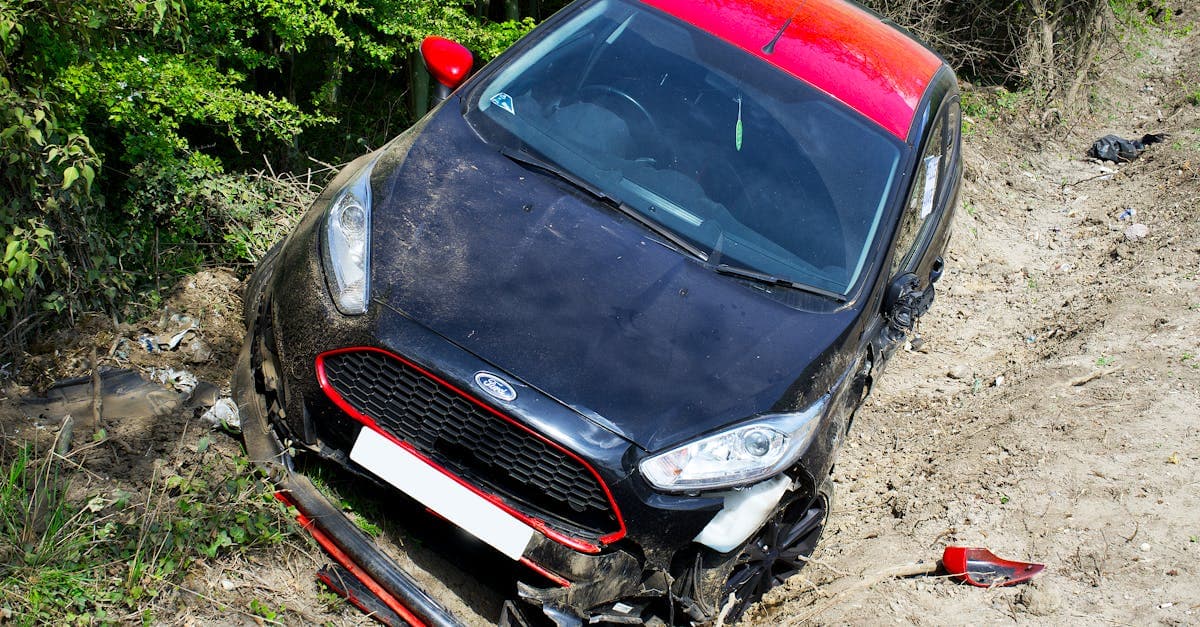
Let's have an honest conversation about whether uninsured motorist coverage is actually worth the money you pay for it. At its core, uninsured motorist coverage is the compass that guides you through the financial aftermath when an uninsured driver derails your journey. The question of whether it is worth the cost comes down to a straightforward comparison between what you pay and what you could lose.
The annual premium for UM coverage typically ranges from fifty to two hundred dollars depending on your state, your limits, and your personal risk factors. The potential loss from an uninsured motorist accident includes medical bills that can reach tens of thousands of dollars, lost wages during recovery, pain and suffering that can exceed the medical costs, and vehicle damage that may total your car.
Consider the unmarked hazard that waits at every intersection where an uninsured driver might appear. Every time you drive, you share the road with millions of drivers who carry no insurance. When one of them causes an accident, the financial burden falls entirely on the victim unless that victim has UM coverage. Without it, you are left to pursue an uninsured driver who almost certainly lacks the assets to pay a judgment.
The cost-benefit ratio of UM coverage is unlike almost any other insurance product. You pay a modest premium for protection against a statistically significant risk with potentially devastating financial consequences. This combination of low cost, high potential benefit, and meaningful probability makes UM coverage one of the clearest value propositions in personal insurance.
Real Claim Scenarios That Show UM Coverage Worth
Here is the thing though — Abstract cost-benefit analysis is useful, but real-world claim scenarios bring the value of UM coverage into sharp focus. These examples are based on typical claim patterns and illustrate what happens with and without UM coverage.
Scenario one — rear-end collision: A driver is rear-ended at a stoplight by an uninsured driver traveling thirty-five miles per hour. Injuries include whiplash, two herniated discs, and a concussion. Medical bills total twenty-eight thousand dollars. Lost wages over six weeks of recovery equal eight thousand dollars. Pain and suffering compensation is valued at twenty thousand dollars. With UM coverage at one hundred thousand, the claim pays fifty-six thousand dollars. Without UM coverage, the driver absorbs these costs after health insurance pays its share of medical bills.
Scenario two — intersection T-bone: An uninsured driver runs a stop sign and strikes a family vehicle. The driver suffers a broken arm and three broken ribs. A child passenger sustains a mild traumatic brain injury requiring ongoing monitoring. Combined medical costs exceed seventy-five thousand dollars. Lost wages total twelve thousand dollars. Pain and suffering for both victims is valued at forty-five thousand dollars. Total UM claim: one hundred thirty-two thousand dollars against stacked coverage limits.
Scenario three — hit and run: A pedestrian is struck by an uninsured hit-and-run driver while crossing a marked crosswalk. The pedestrian suffers a shattered knee requiring surgery and six months of rehabilitation. Medical bills reach fifty-two thousand dollars. The victim's auto policy UM coverage pays the full claim including pain and suffering.
The common thread: In every scenario, the cumulative UM premiums paid over the policyholder's driving lifetime are a fraction of the single claim payout. The coverage proves its worth many times over in a single incident.
When UM Coverage Might Not Be Worth It
Here is the thing though — Intellectual honesty requires acknowledging that UM coverage is not universally necessary. While it is worth it for the vast majority of drivers, a small number of situations exist where declining it could be rational.
Very limited driving: If you drive fewer than one thousand miles per year and your vehicle spends most of its time parked, your exposure to uninsured motorists is minimal. However, the premium is also low for limited-use vehicles, so the savings from declining are small.
Exceptional other coverage: If you have comprehensive health insurance with low out-of-pocket maximums, long-term disability insurance that replaces most of your income, substantial liquid savings exceeding one hundred thousand dollars, and collision coverage on your vehicle, you may be able to self-insure the risks UM coverage addresses. Few people meet all of these conditions.
No assets to protect: If you have no savings, no property, and no income to protect, the financial impact of an uninsured motorist accident is limited to medical bills that health insurance or Medicaid may cover. This situation applies to very few drivers and changes as soon as financial circumstances improve.
Mandatory coverage offset: In states where PIP or MedPay is mandatory and provides relatively high limits, the overlap with UM medical coverage reduces the additional value of UM. However, UM still covers pain and suffering and lost wages beyond what PIP provides.
The caution: Even in these scenarios, the premium cost of UM coverage is so low that most financial advisors still recommend carrying it. The savings from declining are typically less than fifteen dollars per month — a marginal savings that provides no meaningful budget relief while creating potentially significant exposure.
Self-Insurance vs UM Coverage: Can You Just Save the Money?
Now, this is where it gets interesting. Some drivers reason that they would be better off saving the UM premium and self-insuring the risk. This approach sounds logical but fails under examination for most households.
The savings math: If you save one hundred fifty dollars per year — a typical UM premium — you accumulate fifteen hundred dollars over ten years and six thousand over forty years. That is your self-insurance fund. A single moderate UM claim averages twenty thousand to fifty thousand dollars. Your savings would cover a fraction of the loss.
The timing problem: Self-insurance only works if the loss does not occur before the savings fund is built. If an uninsured driver hits you in year two of your savings program, you have three hundred dollars saved against a potential twenty-thousand-dollar loss. Insurance eliminates this timing risk by providing full coverage from day one.
The severity problem: Self-insurance works for predictable, manageable losses. Uninsured motorist losses are neither predictable nor manageable — they can range from a few thousand to hundreds of thousands of dollars. The variance is too extreme for effective self-insurance at the premium savings level.
The opportunity cost argument: Some argue that investing the premium savings generates returns that enhance the self-insurance fund. At seven percent annual returns, one hundred fifty dollars per year grows to approximately six thousand five hundred dollars over twenty years. A single serious UM claim still exceeds this amount by a factor of ten or more.
When self-insurance works: Self-insurance against UM risk is defensible only for individuals with liquid assets exceeding two hundred thousand dollars who can absorb a catastrophic loss without financial disruption. For everyone else, the premium cost of transferring this risk to an insurer is money well spent.
UM Coverage During Economic Downturns
Now, this is where it gets interesting. Economic recessions create a paradox for UM coverage: the coverage becomes more valuable precisely when household budgets are most strained. Understanding this dynamic helps you make better coverage decisions during difficult economic times.
Rising uninsured rates: During recessions, the number of uninsured drivers increases as people cut expenses. The Insurance Research Council documented significant increases in uninsured driving during the 2008 recession. Economic downturns in the years since have shown similar patterns. When more drivers are uninsured, your risk of encountering one increases.
Budget pressure on coverage: When money is tight, drivers look for ways to reduce insurance costs. UM coverage, as an optional add-on in many states, is often among the first coverages considered for elimination. This creates the dangerous situation of dropping protection precisely when the risk is increasing.
Why keeping UM matters more during downturns: During a recession, you are less able to absorb unexpected financial shocks. Your savings may be depleted, your employment may be uncertain, and your access to credit may be limited. An uninsured motorist accident during these vulnerable periods can trigger a financial spiral that UM coverage would have prevented.
Affordable protection maintenance: Even during tight budget periods, UM coverage remains one of the most affordable coverages on your policy. Before cutting UM, consider reducing other expenses or adjusting your UM limits downward rather than eliminating the coverage entirely. Some UM coverage is dramatically better than none.
The countercyclical value: UM coverage value increases during recessions — more uninsured drivers, higher vulnerability to financial shocks, and fewer alternative resources. This makes it the last coverage you should cut when budgets tighten, not the first.
UM Coverage Value for Retirees
Now, this is where it gets interesting. Retirees face unique considerations when evaluating whether UM coverage is worth the premium. Fixed incomes, increased injury vulnerability, and asset protection priorities all affect the calculation.
Injury severity and recovery: Older adults are more susceptible to serious injuries from vehicle accidents. Bones fracture more easily, recovery takes longer, and complications are more common. Medical costs for retirees injured in accidents tend to be higher and extend over longer treatment periods, making UM coverage more valuable per claim.
Medicare coordination: Retirees on Medicare have health coverage for medical bills, but Medicare has cost-sharing requirements and coverage limitations. UM coverage pays medical expenses without copays or network restrictions and also covers damages Medicare never touches — pain and suffering, loss of enjoyment, and any lost income from part-time work.
Fixed income protection: Retirees living on fixed income from Social Security, pensions, and investments cannot afford unexpected five-figure expenses. UM coverage prevents an uninsured driver accident from depleting retirement savings or forcing changes to a carefully planned retirement budget.
Asset protection: Many retirees have significant assets accumulated over a lifetime — home equity, retirement accounts, savings. While an uninsured driver cannot directly access these assets, the medical expenses and other costs from an uninsured accident can force premature withdrawals, asset liquidation, or debt accumulation. UM coverage shields these assets.
Premium affordability: UM coverage premiums are often lower for retirees who drive fewer miles. The coverage remains just as valuable — even more so given increased injury vulnerability — while the cost decreases. This makes UM coverage an even better value for retired drivers.
UM Coverage vs Health Insurance: Why You Need Both
Now, this is where it gets interesting. One of the most common reasons drivers skip UM coverage is the belief that health insurance provides adequate protection. This is the compass that guides you through the financial aftermath when an uninsured driver derails your journey against a dangerous misconception, because health insurance and UM coverage serve fundamentally different purposes.
What health insurance covers: Medical treatment costs — hospital stays, surgery, doctor visits, prescriptions, and rehabilitation. Health insurance pays providers for the cost of treating your injuries.
What health insurance does not cover: Lost wages during recovery. Pain and suffering. Emotional distress. Vehicle damage. Diminished earning capacity from permanent injuries. Loss of enjoyment of life. These damages can easily exceed the medical bills, and no health insurance policy pays a single dollar toward any of them.
Cost differences in coverage: Health insurance comes with deductibles ranging from five hundred to several thousand dollars, copays of twenty to fifty dollars per visit, coinsurance of ten to thirty percent on major procedures, and network restrictions that can limit your choice of providers. UM coverage pays reasonable and customary medical expenses without these limitations.
The coordination advantage: When you have both health insurance and UM coverage, you receive the most comprehensive protection available. Health insurance provides immediate access to medical care. UM coverage pays for everything health insurance misses — the out-of-pocket medical costs, the lost wages, and the pain and suffering that represent the largest portion of most injury claims.
The bottom line: Health insurance is essential for medical care, but it is not designed to make you whole after an accident caused by someone else. UM coverage fills the gap between what health insurance pays and what you actually lose. Having one does not eliminate the need for the other.
UM Coverage Value for Daily Commuters
Here is the thing though — Daily commuters spend more time on the road than occasional drivers, which directly increases their exposure to uninsured motorists. The value calculation for commuters is especially compelling.
Increased exposure: A typical commuter drives twelve thousand to fifteen thousand miles per year, spending three hundred to five hundred hours behind the wheel. Every mile and every minute increases the probability of an accident, including one involving an uninsured driver. Higher exposure means higher risk, which means higher coverage value.
High-traffic risk zones: Commuters typically drive during peak traffic hours when accident frequency is highest. Urban and suburban commuting routes pass through intersections, merge zones, and congested corridors where accidents are most likely to occur. These are also the environments where uninsured drivers are most concentrated.
Income protection importance: Commuters are, by definition, working — which means they have income to protect. An uninsured driver accident that prevents a commuter from working creates an immediate income gap. UM coverage pays lost wages during recovery, preventing the financial cascade that follows when paychecks stop.
Vehicle dependency: Commuters depend on their vehicles to earn a living. An uninsured driver who totals a commuter's vehicle creates both a property loss and a transportation crisis. UM property damage coverage can fund a replacement vehicle, while collision coverage alone requires paying a deductible out of pocket.
Per-mile cost perspective: A commuter paying one hundred fifty dollars per year for UM coverage and driving fifteen thousand miles annually pays one penny per mile for UM protection. That penny buys protection against losses that can exceed one hundred thousand dollars. No other per-mile expense delivers remotely comparable value.
The Data Verdict: UM Coverage Is Overwhelmingly Worth It
The numbers leave little room for debate. With 12.6 percent of drivers nationally uninsured and average bodily injury claims exceeding twenty thousand dollars, the mathematical case for UM coverage is compelling.
At a typical annual cost of one hundred to two hundred dollars, UM coverage provides protection-to-premium ratios that no other optional auto coverage matches. A single claim can return decades of premiums. The tax-free treatment of payouts further enhances the effective value.
The data also shows that UM coverage becomes more valuable during economic downturns when uninsured driver rates rise, more valuable as medical costs increase faster than premiums, and more valuable as vehicle repair costs grow with advancing technology.
For the data-driven driver, the conclusion is inescapable: UM coverage is not just worth the premium — it is one of the most cost-effective risk management tools available to individual consumers. Carry it, maintain adequate limits, and review it annually.
Continue reading

The Hidden Exclusions That Make Cheap Insurance Quotes Dangerous
Budget insurance quotes often achieve low prices by excluding coverages that standard policies include. Identifying these hidden exclusions before you buy prevents devastating coverage gaps when you need protection most.

Policy Checkup Checklist: Every Item to Review During Your Annual Review
This comprehensive checklist covers every coverage, limit, deductible, endorsement, discount, and beneficiary designation you should review during your annual policy checkup.

How to Protect Yourself Before Signing an Assignment of Benefits
Before signing any AOB, get a written estimate, verify the contractor is licensed, understand the scope of work, and know your right to rescind. These steps protect your interests.