Should You Drop Collision Coverage on an Older Car?

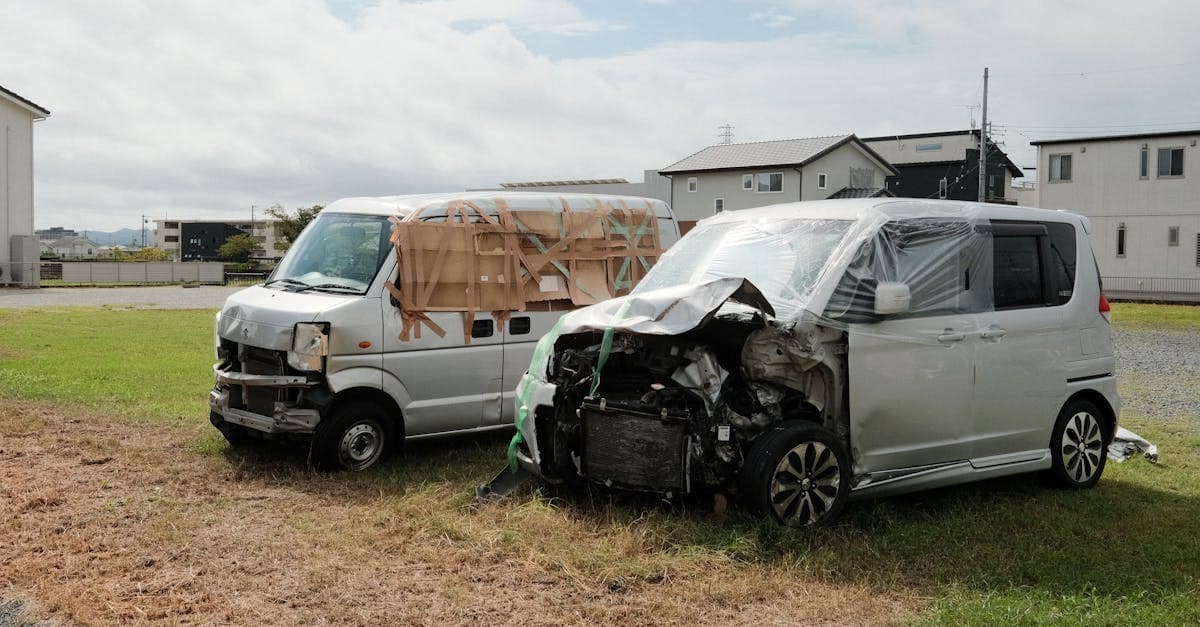
Let's talk about what happens to your car — and your wallet — when an accident occurs and how collision insurance steps in to help. Collision insurance is the compass that guides you through the wreckage back to solid ground — a coverage that pays for damage to your own vehicle when it collides with another vehicle or object, regardless of who is at fault.
This is an important distinction from liability insurance, which pays for damage you cause to others. Collision coverage looks inward — it protects your vehicle, your investment, and your ability to get where you need to go. When you hit a guardrail, rear-end another driver, or roll your vehicle in a ditch, collision coverage pays for the repairs or replacement.
The coverage works through a straightforward mechanism. You choose a deductible when you set up the policy — typically $250, $500, or $1,000. When you file a collision claim, you pay the deductible amount and your insurer covers the rest, up to your vehicle's actual cash value. If repairs cost less than your deductible, the claim is not worth filing.
Collision insurance is not required by state law, but virtually every auto lender and lease company requires it as a condition of financing. Even if you own your vehicle outright, collision coverage provides financial protection that most drivers find valuable — especially for newer vehicles where repair or replacement costs can easily reach thousands or tens of thousands of dollars.
This guide covers everything about collision insurance: what it covers, what it excludes, how claims work, how premiums are calculated, and how to decide whether carrying it makes financial sense for your specific situation.
What Collision Insurance Actually Covers
Here is the thing though — Collision insurance is the compass that guides you through the wreckage back to solid ground. It specifically covers damage to your own vehicle resulting from impact with another vehicle or object. The scope is clearly defined and includes several common accident scenarios.
Vehicle-to-vehicle collisions are the most obvious covered event. Whether you rear-end another car, are hit at an intersection, or are sideswiped on the highway, collision coverage pays for your vehicle's repairs regardless of who is at fault. This applies to accidents with cars, trucks, motorcycles, and any other motor vehicle.
Single-vehicle accidents are equally covered. Hitting a guardrail, telephone pole, tree, curb, or any stationary object triggers collision coverage. Driving into a ditch, rolling your vehicle, or running off the road also qualifies. The key element is impact — your vehicle struck something.
Pothole and road debris damage that results from a collision event is covered. If you hit a pothole that damages your suspension or rim, collision coverage applies because your vehicle impacted an object. Similarly, striking debris on the roadway is a collision event.
Parking lot incidents including backing into posts, being hit by another vehicle while parked, and door-opening damage caused by your vehicle's motion fall under collision coverage. Parking lot claims are among the most frequently filed collision claims in the United States.
The common thread across all covered events is physical impact between your vehicle and another object or surface. If the damage results from something other than impact — such as theft, vandalism, fire, or weather — it falls under comprehensive coverage instead.
Subrogation: How You May Get Your Deductible Back
Here is the thing though — When you file a collision claim for an accident caused by another driver, your insurer pays your claim and then pursues the at-fault driver or their insurance company to recover their costs. This process is called subrogation, and it can also recover your deductible.
How subrogation works: After paying your collision claim, your insurer sends a demand to the at-fault driver's insurer for reimbursement. If successful, the at-fault insurer repays your insurer for the full claim amount, including your deductible. Your insurer then refunds your deductible to you.
Timeline expectations: Subrogation can take weeks to months depending on whether fault is disputed, whether the other driver is insured, and how cooperative their insurer is. Simple rear-end collisions with clear fault typically resolve quickly. Complex multi-vehicle accidents with disputed fault take longer.
Partial recovery scenarios: If fault is shared — say 70/30 — your insurer may recover only 70 percent of the claim. In this case, you would receive 70 percent of your deductible back. The remaining 30 percent reflects your share of fault.
When subrogation fails: If the at-fault driver is uninsured and has no assets, subrogation may recover nothing. Your insurer absorbs their loss and you do not get your deductible back. This scenario underscores why uninsured motorist coverage is valuable alongside collision coverage.
Your role in subrogation: Cooperate with your insurer's subrogation team by providing accurate accident details, police reports, and any evidence you have. Your cooperation helps maximize recovery and increases the likelihood of getting your deductible returned.
Does Your Collision Insurance Cover Rental Cars?
Now, this is where it gets interesting. Before paying for collision damage waiver at the rental counter, check whether your existing auto insurance already provides the protection you need. Many drivers are already covered and overpay for duplicate rental car protection.
Personal auto policy extension: Most personal auto insurance policies extend collision coverage to rental cars. If you carry collision on your personal vehicle, that same coverage typically applies when you rent a car in the United States. The same deductible applies.
What is covered: Your collision coverage on a rental works the same as on your own vehicle — damage from impact with another vehicle or object. If you crash the rental car, your collision coverage pays for the damage minus your deductible.
Important limitations: Coverage typically applies only to standard passenger vehicles rented for personal use. Exotic cars, trucks over a certain weight, motorcycles, and recreational vehicles are often excluded. Rentals for business purposes may also fall outside personal policy coverage.
International rentals: Personal auto policies generally do not extend to rentals outside the United States and Canada. If you are renting internationally, you typically need to purchase the rental company's coverage or use a credit card that provides international rental coverage.
Credit card collision benefits: Many premium credit cards offer rental car collision coverage as a cardholder benefit. Coverage varies — some cards provide primary coverage while others provide secondary coverage that pays only after your personal insurance. Read the card's benefit terms carefully and understand whether coverage is primary or secondary before relying on it.
The informed decision: At the rental counter, know whether your personal policy covers rental cars, what your deductible is, and whether your credit card provides additional coverage. This knowledge prevents you from paying $15 to $30 per day for coverage you already have.
Diminished Value After a Collision: The Hidden Loss
So what does this mean for you? Even after professional repairs, a vehicle that has been in a collision is worth less than an identical vehicle that has not. This loss of value — called diminished value — is a real financial consequence that collision insurance does not automatically cover.
What diminished value means: When you eventually sell or trade your vehicle, its accident history reduces its market value. Buyers and dealers pay less for vehicles with collision history on their Carfax or AutoCheck reports. This reduction can range from 5 to 25 percent of the vehicle's pre-accident value depending on the severity of damage and the vehicle's age.
Types of diminished value: Inherent diminished value is the automatic loss that comes from the accident being on record, even with perfect repairs. Repair-related diminished value results from imperfect repairs — mismatched paint, slight misalignment, or other visible evidence of prior damage. These losses compound for newer and higher-value vehicles.
Can you claim diminished value? In most states, you can pursue a diminished value claim against the at-fault driver's insurance (not your own). Georgia is the only state that explicitly requires your own insurer to pay diminished value under your collision coverage. In other states, diminished value claims are typically third-party claims filed against the at-fault party.
How to document diminished value: Get a professional diminished value appraisal from an independent appraiser. This report documents your vehicle's pre-accident value, the accident details, and the estimated post-repair loss in value. Present this appraisal to the at-fault driver's insurer as the basis for your claim.
Practical expectations: Diminished value claims are most viable for newer vehicles with significant damage. A two-year-old luxury sedan with structural damage may have a strong diminished value claim. A ten-year-old economy car with a minor fender repair may not have a viable claim.
Collision Insurance for Electric and Hybrid Vehicles
Here is the thing though — Electric and hybrid vehicles present unique collision insurance considerations due to their specialized components, higher repair costs, and evolving technology. Understanding these factors is understanding the roadmap from dented metal to restored mobility for the future of driving.
Higher repair costs: Electric vehicles cost an average of 25 to 50 percent more to repair after a collision than comparable gas-powered vehicles. Specialized battery packs, electric drive components, aluminum body panels, and integrated sensor systems all contribute to higher parts and labor costs.
Battery damage concerns: The battery pack in an electric vehicle can cost $5,000 to $20,000 or more to replace. A collision that damages the battery pack can transform a moderate accident into a near-total-loss situation. Collision coverage is particularly important for EVs because this single component can represent a massive repair expense.
Specialized repair requirements: Not all body shops are equipped to repair electric vehicles safely. High-voltage battery systems require specialized training and equipment. Your insurer's preferred shop network may have limited EV-certified facilities, which can extend repair timelines.
Premium implications: Collision premiums for electric vehicles are typically 10 to 30 percent higher than for comparable gas-powered vehicles, reflecting the higher repair costs. As EV adoption grows and repair infrastructure develops, this premium gap is expected to narrow.
Tesla and other EV-specific insurance: Some manufacturers, notably Tesla, offer their own insurance products with collision coverage specifically priced for their vehicles. These products may offer more competitive rates than traditional insurers because the manufacturer has direct data on repair costs and vehicle safety performance.
Hybrid considerations: Hybrid vehicles fall between EVs and traditional vehicles in collision cost. They have both combustion and electric components, creating moderate cost increases over standard vehicles.
Understanding Your Collision Deductible
Here is the thing though — Your collision deductible is the amount you pay out of pocket before insurance covers the remaining repair or replacement cost. It is the price of accessing the roadmap from dented metal to restored mobility through your insurance policy.
Common deductible amounts range from $100 to $2,500, with $500 and $1,000 being the most popular choices. The right amount depends on your savings, your premium sensitivity, and how much out-of-pocket cost you can absorb comfortably after an accident.
How the deductible applies in practice: If your collision repair costs $6,000 and your deductible is $500, you pay $500 and the insurer pays $5,500. If repairs cost $400 and your deductible is $500, the insurer pays nothing — the entire cost falls below your deductible threshold.
Deductible and premium relationship: Higher deductibles produce lower premiums. Moving from a $250 deductible to a $500 deductible typically saves 15 to 20 percent on your collision premium. Moving from $500 to $1,000 saves an additional 10 to 15 percent. Each increase saves less incrementally because the insurer's risk reduction shrinks.
The break-even calculation matters. If raising your deductible from $500 to $1,000 saves you $150 per year, you break even after 3.3 years without a claim. Since the average driver goes seven to ten years between collision claims, the higher deductible saves money for most people over time.
Your deductible should match your emergency fund. If paying a $1,000 deductible would create financial hardship, stick with $500. The premium savings from a deductible you cannot actually afford are meaningless if an accident leaves you unable to cover the cost.
Understanding Actual Cash Value in Collision Claims
Now, this is where it gets interesting. Collision insurance pays up to your vehicle's actual cash value — not its original purchase price or replacement cost. Understanding how ACV works prevents disappointment when you file a claim.
What actual cash value means: ACV is your vehicle's fair market value immediately before the accident. It reflects the price a reasonable buyer would pay for your specific vehicle in its pre-accident condition, considering year, make, model, trim, mileage, condition, options, and local market factors.
How insurers calculate ACV: Most insurers use third-party valuation services that aggregate vehicle listing data, auction results, and dealer transactions. CCC Intelligent Solutions, Mitchell, and Kelley Blue Book are common sources. The valuation considers your vehicle's specific attributes — a low-mileage vehicle in excellent condition receives a higher valuation than a high-mileage vehicle with wear.
Depreciation is the key factor. New vehicles lose 20 to 30 percent of their value in the first year and continue depreciating roughly 15 percent annually after that. A vehicle purchased for $35,000 may have an ACV of $22,000 after three years. This gap between what you paid and what the insurer pays is the most common source of collision claim dissatisfaction.
Challenging an ACV determination: If you believe the insurer's valuation is too low, gather evidence. Search for comparable vehicles for sale in your area with similar year, make, model, mileage, and condition. Document any recent maintenance, new tires, or improvements that increase your vehicle's value. Present this evidence in writing and request a review.
Gap insurance addresses the ACV shortfall. If you owe more on your loan than your vehicle's ACV — common in the first two to three years of a loan — gap insurance covers the difference between the collision payout and your loan balance.
The Numbers Behind Smart Collision Coverage Decisions
The data tells a clear story about collision insurance: it provides strong expected value for most drivers during the early and middle years of vehicle ownership, and diminishing value as vehicles age and depreciate.
The expected value calculation: With an average claim of $4,700 and an average claim frequency of once every seven to ten years, the expected annual collision cost is $470 to $670. If your annual collision premium is below this range, the coverage is statistically favorable. If your premium significantly exceeds this range — common for young drivers, urban drivers, and high-value vehicles — the coverage may still be essential but the math warrants careful deductible optimization.
The deductible sweet spot: Data consistently shows that $1,000 is the optimal collision deductible for most drivers. The premium savings over a $500 deductible typically exceed the additional out-of-pocket cost across a normal claim frequency. The savings over a $250 deductible are even more dramatic.
The drop-off point: Statistical analysis suggests that dropping collision coverage becomes favorable when your vehicle's value falls below approximately $4,000 to $6,000 — the point where annual premiums consume a disproportionate share of the potential payout. Your individual calculation depends on your specific premium, deductible, and risk tolerance.
These numbers provide a foundation for decision-making, but your personal circumstances — financial resilience, transportation dependency, and risk tolerance — ultimately determine the right collision coverage strategy.
Continue reading

The Hidden Exclusions That Make Cheap Insurance Quotes Dangerous
Budget insurance quotes often achieve low prices by excluding coverages that standard policies include. Identifying these hidden exclusions before you buy prevents devastating coverage gaps when you need protection most.

Policy Checkup Checklist: Every Item to Review During Your Annual Review
This comprehensive checklist covers every coverage, limit, deductible, endorsement, discount, and beneficiary designation you should review during your annual policy checkup.

How to Protect Yourself Before Signing an Assignment of Benefits
Before signing any AOB, get a written estimate, verify the contractor is licensed, understand the scope of work, and know your right to rescind. These steps protect your interests.