Replacement Cost vs Market Value: Why They Are Not the Same

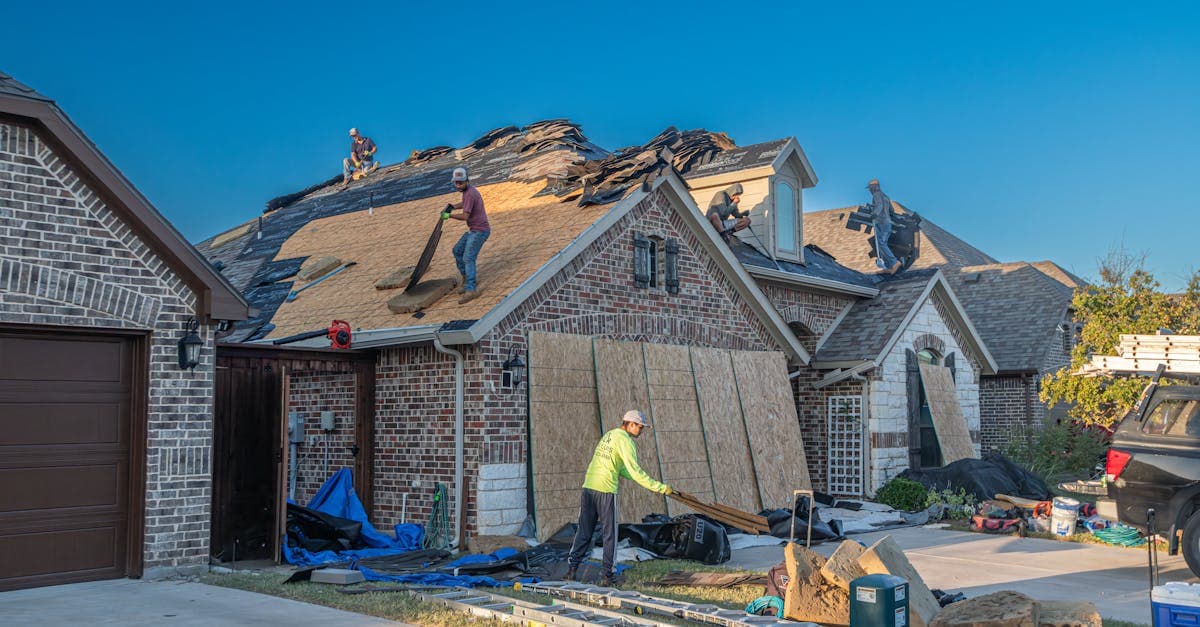
Let's talk about one of the most important concepts in property insurance — replacement cost. In insurance terms, replacement cost is the compass that points to what it truly costs to rebuild — the dollar amount needed to replace or rebuild your damaged property with materials of similar kind and quality, without deducting for depreciation.
This concept stands in contrast to actual cash value, which reduces the payout by the amount your property has depreciated since it was new. A five-year-old roof might cost $15,000 to replace, but its actual cash value — factoring in five years of wear — might be only $10,000. Under replacement cost coverage, you receive the full $15,000. Under actual cash value, you receive $10,000.
The distinction matters enormously at claim time. For a total home loss, the gap between replacement cost and actual cash value can reach six figures. For personal property, the cumulative depreciation on furniture, electronics, appliances, and clothing often reduces an ACV payout to a fraction of what it costs to replace everything.
Replacement cost coverage represents the true north of your property's worth at today's prices. It is the insurance industry's commitment to making you whole — restoring you to the same position you occupied before the loss, not a diminished version of it. This principle is why replacement cost has become the standard for modern property insurance, even though it costs more than actual cash value coverage.
Understanding how replacement cost works, how insurers calculate it, and how it applies during a claim empowers you to verify your coverage, challenge low estimates, and ensure that your policy truly protects what you have built.
Replacement Cost and Betterment
Here is the thing though — Betterment occurs when repairs or replacement result in a property that is better than its pre-loss condition. Understanding how insurers handle betterment prevents disputes and unexpected costs.
What betterment means: If repairing or replacing a damaged component unavoidably improves the property beyond its pre-loss condition, the improvement is called betterment. Insurance is designed to restore you to your pre-loss condition — not to improve your position. Insurers may reduce payment for the betterment component.
Common betterment scenarios: A 15-year-old roof is damaged and the only available replacement shingles have a 30-year warranty, providing better performance than the original. The insurer pays replacement cost for the new roof but might argue that the upgraded warranty represents betterment. Plumbing repairs that replace old galvanized pipe with modern copper or PEX similarly represent a functional improvement.
How insurers handle betterment: Practices vary. Some insurers pay the full replacement cost when betterment is unavoidable — when the original materials are no longer available or no longer meet code. Others deduct a betterment charge representing the value of the improvement.
State regulations: Some states prohibit betterment deductions when the improvement is due to code requirements or material unavailability. Others allow betterment deductions in all circumstances. Check your state's insurance regulations and your policy language.
Minimizing betterment disputes: Document the pre-loss condition of your property with photos and records. When replacement materials represent an improvement, note whether the original materials are still available. If they are not, the betterment is unavoidable and should not reduce your payout.
Ordinance or law coverage: When betterment results from code-required upgrades, ordinance or law coverage — if you have it — pays the difference. This is another reason why this endorsement is valuable for older homes where any reconstruction triggers significant code upgrades.
The Two-Payment Process in Replacement Cost Claims
Now, this is where it gets interesting. One of the most misunderstood aspects of replacement cost coverage is the two-payment process. Most policyholders expect to receive the full replacement cost immediately, but that is not how most policies work.
Payment one — actual cash value: When you file a claim under a replacement cost policy, the insurer first calculates the replacement cost of the damaged property and then deducts depreciation. This ACV amount is your initial payment (minus your deductible). You receive this money to begin repairs or replacements.
Payment two — recoverable depreciation: After you complete the repairs or replace the items, you submit proof of the actual costs incurred. The insurer then pays the recoverable depreciation — the difference between the ACV already paid and the actual replacement cost incurred, up to your policy limit.
Example: Your roof is damaged and costs $18,000 to replace. The adjuster calculates $5,400 in depreciation (30 percent for a roof that is 6 years into a 20-year life). Payment one: $18,000 minus $5,400 depreciation minus $1,000 deductible equals $11,600. Payment two: after you complete the roof replacement and submit the contractor's invoice, the insurer pays the $5,400 recoverable depreciation.
Time limits apply: Most policies require you to complete replacement within a specified period — often 180 days to two years, depending on the insurer and state regulations. If you miss the deadline, you forfeit the recoverable depreciation and keep only the ACV payment.
What if you choose not to replace? If you decide not to repair or replace the damaged property, most policies pay only the ACV amount. The recoverable depreciation is available only when you actually incur the replacement cost.
Cash flow implications: The two-payment process means you may need to fund a portion of the rebuilding or replacement upfront, before receiving the full recovery. Planning for this cash flow gap prevents financial strain during an already stressful time.
Understanding Recoverable Depreciation
So what does this mean for you? Recoverable depreciation is the portion of your claim payment that is withheld initially and reimbursed after you complete repairs. It is one of the most important and least understood aspects of replacement cost coverage.
What recoverable depreciation is: When an insurer pays a replacement cost claim, they first calculate the full replacement cost, then deduct depreciation to arrive at the ACV. The depreciation amount is considered recoverable — meaning you can claim it back after completing the replacement.
Example: Your 12-year-old HVAC system is destroyed. Replacement cost: $8,000. Depreciation (12 years at 5 percent per year): $4,800. Initial payment: $8,000 minus $4,800 minus $1,000 deductible equals $2,200. Recoverable depreciation: $4,800. After you install the new system and submit the invoice, the insurer pays the $4,800.
Time limits on recovery: Most policies impose a deadline for completing replacement and claiming recoverable depreciation — commonly 180 days to two years. Some states mandate minimum recovery periods. Check your policy for the specific deadline, as missing it means permanently forfeiting the recoverable depreciation.
Extensions: If you need more time to complete repairs — common after widespread disasters when contractors are scarce — contact your insurer before the deadline to request an extension. Many insurers will grant reasonable extensions, especially after catastrophic events.
Non-recoverable depreciation: Some policies or states treat depreciation as non-recoverable for certain items — particularly labor costs. In these cases, only the material depreciation is recoverable, and the labor depreciation is permanently deducted. This distinction can significantly affect your total payout.
Strategic considerations: Because replacement cost policies pay the full RC only after you complete replacement, you need funds to bridge the gap between the ACV payment and the total project cost. Your emergency fund, savings, or a contractor willing to bill upon completion can cover this gap.
Functional Replacement Cost: A Practical Alternative
Here is the thing though — Functional replacement cost is a valuation approach that covers rebuilding with modern materials and methods that serve the same function as the original construction, rather than replicating the original materials exactly.
When functional RC applies: Functional replacement cost is most commonly used for older homes where exact replication of original materials would be prohibitively expensive or impractical. A home with plaster walls, hardwood trim, and slate roofing might cost $600,000 to replicate exactly but only $350,000 to rebuild with drywall, modern trim, and asphalt shingles that serve the same functional purpose.
How it differs from standard RC: Standard replacement cost covers rebuilding with materials of similar kind and quality. Functional RC covers rebuilding with materials that perform the same function. The distinction matters for homes with premium, obsolete, or specialty original materials.
Who uses functional RC: Some insurers offer functional replacement cost as the standard coverage for homes over a certain age — typically 40 to 75 years old. Others offer it as an option at a lower premium than full replacement cost.
Advantages: Functional RC premiums are typically 15 to 25 percent lower than full RC premiums for older homes. The coverage is adequate for policyholders who care about function over aesthetics and are comfortable with modern materials.
Disadvantages: Functional RC may not satisfy policyholders who value the historic character of their homes. Replacing plaster with drywall or slate with asphalt changes the look, feel, and character of the home, even if the functional performance is equivalent.
Historic home considerations: If your home is in a historic district that requires period-appropriate materials for exterior renovations, functional RC may not meet local requirements. In these cases, full replacement cost or historic home coverage is necessary.
Green Building and Replacement Cost
Now, this is where it gets interesting. Some homeowners want to rebuild with environmentally sustainable materials and energy-efficient systems after a loss. Standard replacement cost coverage may not cover the higher costs of green construction.
The cost premium: Green building materials and systems typically cost 10 to 20 percent more than conventional alternatives. High-efficiency HVAC systems, solar panels, sustainable flooring, low-VOC paints, and enhanced insulation all carry price premiums that exceed the cost of standard replacement.
Standard RC limitations: Replacement cost coverage pays to replace with similar kind and quality materials. If your original home had standard materials, the insurer is not obligated to pay the premium for green upgrades — even if you prefer sustainable options.
Green building endorsements: Several insurers offer green building or green upgrade endorsements that cover the additional cost of rebuilding with environmentally certified materials and systems. These endorsements typically cover LEED-certified or ENERGY STAR-rated materials, high-efficiency HVAC and water heating, enhanced insulation beyond code requirements, sustainable flooring and finishes, and solar or wind energy systems.
Cost of the endorsement: Green building endorsements typically add 5 to 10 percent to the dwelling premium. The exact cost depends on the scope of coverage and the insurer.
Who benefits most: Homeowners who have already invested in green features should ensure their replacement cost coverage reflects the higher cost of these systems. Homeowners who want to upgrade to green materials after a loss need the endorsement to cover the cost difference.
Code considerations: As building codes increasingly require energy-efficient construction, the gap between standard and green building costs is narrowing. Ordinance or law coverage may cover some energy efficiency upgrades that are now code-required, reducing the need for a separate green building endorsement.
How Climate Change Is Increasing Replacement Costs
So what does this mean for you? Climate change is driving replacement costs higher through increased disaster frequency, more stringent building codes, and higher demand for construction resources.
More frequent severe events: As climate patterns shift, the frequency of hurricanes, wildfires, severe storms, and flooding events is increasing. Each major event triggers demand surge in the affected region, driving up material and labor costs. These surges are becoming more frequent and affecting more regions.
Stricter building codes: In response to climate-driven risks, jurisdictions are tightening building codes. Florida's post-hurricane code requirements, California's wildfire-resistant construction standards, and updated wind and flood zone designations all add cost to construction. Rebuilding to these enhanced codes costs 15 to 30 percent more than pre-update standards.
Material and design changes: Climate-resilient construction — impact-resistant windows, reinforced roofing, elevated foundations, fire-resistant siding — costs more than standard materials. As these features become code requirements, they become embedded in replacement costs.
Insurance market response: Insurers are recalibrating replacement cost estimates to reflect climate-driven cost increases. Some are also raising premiums, tightening underwriting criteria, or withdrawing from high-risk markets entirely, reducing coverage options for homeowners in climate-vulnerable areas.
What homeowners should do: Review your replacement cost coverage in the context of current climate risks and building code requirements in your area. Ensure your limits reflect the cost of climate-resilient construction, not pre-update estimates. Consider extended replacement cost coverage to buffer against unexpected cost increases.
Long-term planning: Climate change effects on replacement costs are accelerating. Annual coverage reviews are more important than ever. Homeowners in climate-vulnerable areas should be particularly proactive about maintaining adequate coverage and exploring supplemental policies for flood, wind, and wildfire.
Extended Replacement Cost Coverage
Here is the thing though — Extended replacement cost coverage provides a buffer above your dwelling coverage limit, typically paying 125 to 150 percent of the stated limit if actual rebuilding costs exceed the limit. This endorsement protects against cost overruns that are beyond your control.
How it works: If your dwelling coverage limit is $300,000 and you have a 25 percent extended replacement cost endorsement, the insurer will pay up to $375,000 to rebuild your home. This additional $75,000 buffer protects against unexpected cost increases during reconstruction.
When it matters most: Extended replacement cost is most valuable after widespread disasters when demand surge drives up construction costs. After a hurricane or wildfire that destroys hundreds of homes simultaneously, contractors, materials, and labor become scarce. Prices spike 20 to 50 percent or more above normal levels. Standard replacement cost coverage at the stated limit may fall short.
Typical endorsement levels: Most insurers offer extended replacement cost at 125 percent or 150 percent of the dwelling limit. The cost is typically modest — $50 to $200 per year depending on your base premium and the extension percentage.
Differences from guaranteed replacement cost: Extended replacement cost has a cap — 125 or 150 percent. Guaranteed replacement cost has no cap and pays whatever it costs to rebuild, regardless of the amount. Guaranteed RC is rare and typically available only for high-value homes through specialty insurers.
Who should consider it: Every homeowner should strongly consider extended replacement cost coverage. The endorsement is affordable, and the scenarios it protects against — post-disaster cost surges, unexpected code requirements, material price spikes — are both common and financially significant.
Limitations: Extended RC still has a ceiling. In extreme post-disaster scenarios, costs can exceed even 150 percent of the estimated replacement cost. However, the buffer it provides covers the vast majority of cost overrun situations.
What the Data Says About Replacement Cost Coverage
The numbers make a compelling case for proactive replacement cost management. Sixty-five percent of American homes are underinsured relative to their replacement cost, with an average gap of 27 percent. Construction costs have increased 42 percent since 2019. The average difference between replacement cost and actual cash value payouts on a total home loss exceeds $100,000.
These statistics translate to real financial consequences. In the aftermath of recent disasters, thousands of homeowners discovered that their coverage limits fell far short of actual rebuilding costs. The resulting out-of-pocket expenses drained savings, forced additional borrowing, and in some cases prevented rebuilding entirely.
The data-driven approach is straightforward: know your replacement cost, insure to that amount, add extended replacement cost coverage, and review annually. The homeowners who follow this approach recover fully from losses. Those who do not are the ones represented in the underinsurance statistics.
The additional premium for adequate replacement cost coverage is modest compared to the potential shortfall. A 15 to 20 percent increase in premium to eliminate a 27 percent coverage gap is simple, compelling math. Act on the data, not on inertia.
Continue reading

The Hidden Exclusions That Make Cheap Insurance Quotes Dangerous
Budget insurance quotes often achieve low prices by excluding coverages that standard policies include. Identifying these hidden exclusions before you buy prevents devastating coverage gaps when you need protection most.

Policy Checkup Checklist: Every Item to Review During Your Annual Review
This comprehensive checklist covers every coverage, limit, deductible, endorsement, discount, and beneficiary designation you should review during your annual policy checkup.

How to Protect Yourself Before Signing an Assignment of Benefits
Before signing any AOB, get a written estimate, verify the contractor is licensed, understand the scope of work, and know your right to rescind. These steps protect your interests.